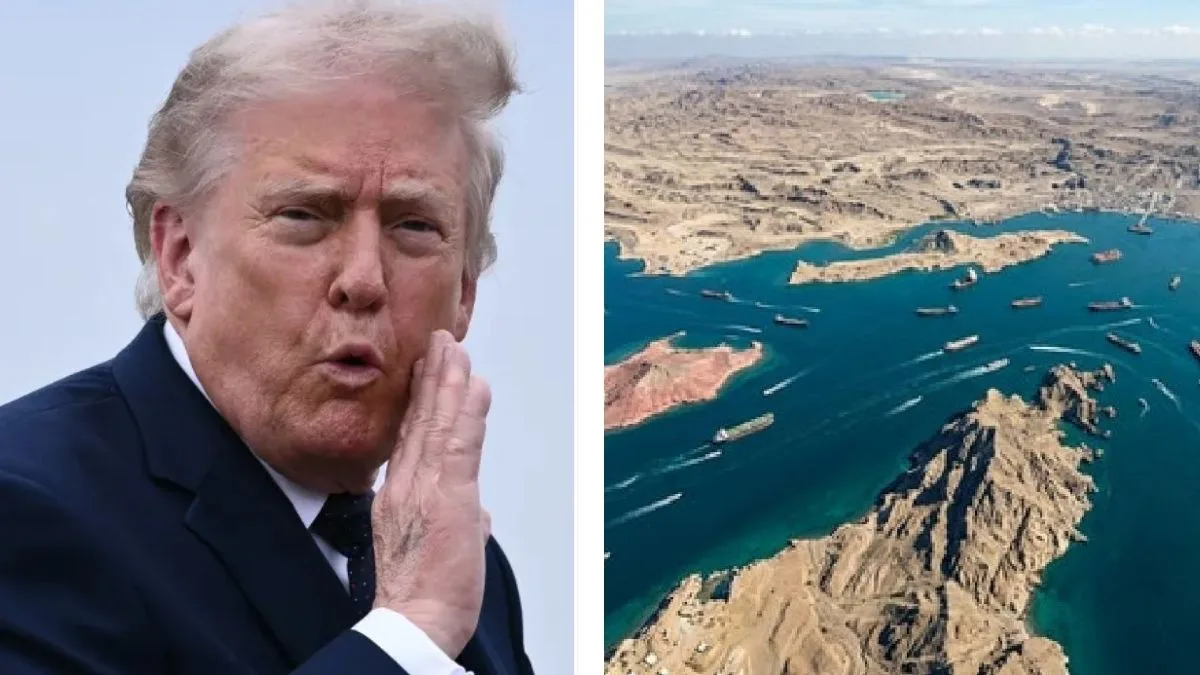
The US and Iran are back to trading blows, and this time it looks worse than before. Fresh American strikes hit Iran over the weekend, right after a container ship got hit in the Strait of Hormuz — one of the most critical chokepoints for global oil and gas shipping.
Whatever hope was left for a ceasefire is pretty much gone now. What we’re looking at instead is a region sliding toward a bigger war, energy markets bracing for higher prices, and global trade caught in the crossfire.
Advertisement
Why the US struck back
The Pentagon says it launched another round of strikes on Iran after the Islamic Revolutionary Guard Corps hit a commercial container ship — the M/V GFS Galaxy, flying a Cyprus flag — as it moved through the Strait on Sunday. The ship’s engine room took serious damage, and one crew member is still unaccounted for.
According to Central Command, the US operation kicked off at 7:15 p.m. Eastern time Saturday, roughly an hour after Iran had put out a public warning about what was coming. Central Command also confirmed something notable: President Trump personally signed off on the strikes. The White House hasn’t said anything publicly yet.
Iran tells a different story
Naturally, Tehran sees it differently. Iranian officials say they only fired a warning shot after several vessels strayed into what they called an “unauthorized route” through the Strait — and that one of those warning shots hit a ship by accident, not on purpose.
After the incident, Iran declared the Strait effectively closed and said any US military response would get a “severe” reply. The Revolutionary Guards went further, saying the waterway stays shut until — in their words — “the end of U.S. interference in this region.” Iran also insists several ships ignored repeated warnings before things escalated.
Why the Strait matters so much
This isn’t just a regional skirmish — the Strait of Hormuz carries close to a fifth of the world’s oil and LNG on a normal day. Choke that off, even partially, and energy markets feel it almost immediately.
That’s exactly what’s happening. Oil and gas prices have already jumped since Iran’s blockade took hold, and that’s feeding into inflation worldwide — gas prices in particular are becoming a political headache in the US, with midterm elections in November not far off.
So much for the ceasefire
Whatever ceasefire existed between the two countries is basically dead now. After days of tit-for-tat strikes, Trump came out and said flatly that the truce was no longer in effect. That agreement had been meant to end the fighting that started back on February 28, when the US and Israel first launched operations against Iran.
Trump hasn’t completely closed the door on talks, though — he’s left room for negotiations if things settle down.
What Washington wants before reopening the Strait
US officials have laid out their terms pretty clearly: Iran needs to publicly commit to stopping attacks on commercial ships, and the shipping lanes need to stay open to everyone — no tolls, no restrictions. That’s the baseline for any real diplomatic progress from here.
Iran says the US broke the deal first
Iran’s foreign minister, Abbas Araqchi, isn’t having it. He posted on X that any peace deal only works if both sides actually stick to it — implying, pretty clearly, that he thinks Washington broke the ceasefire first, not Iran.
How we got here
This didn’t come out of nowhere. Earlier in the week, three tankers — from Qatar and Saudi Arabia — were attacked, which led the US to cancel the license that had allowed Iranian oil sales. That, in turn, triggered US strikes on Iranian targets, and Iran hit back by targeting American military sites across the Gulf.
Iran hasn’t officially claimed the tanker attacks, but plenty of regional analysts think this is a familiar pattern — Iran using these kinds of operations to strengthen its hand before any negotiations.
Talks are still happening, quietly
Even with all this fighting, diplomacy hasn’t completely stalled. A source close to the Iranian government told Reuters that Iran, the US, Qatar, and Pakistan had informally agreed to sit down for talks, with international mediators trying to pull it together. This was reportedly in motion while Araqchi was in Oman — a country that’s long played middleman between Washington and Tehran.
Whether those talks actually happened, or led anywhere, is still unclear.
Oman’s quiet diplomacy
Oman keeps working the back channels. Araqchi met with his Omani counterpart, Badr Albusaidi, to talk through ways to keep ships moving safely through the Strait. Omani state media says technical and political discussions are ongoing.
CNN also reported that Oman has floated a proposal: ships using the southern route through Omani waters would sail freely, no questions asked, while ships taking the northern route through Iranian waters would need Iran’s approval first — though, notably, without any fees attached. Neither the White House nor the State Department has commented on it.
Iran’s new leader makes a promise
Things inside Iran have gotten tense too. The country’s new supreme leader, Ayatollah Mojtaba Khamenei, put out a statement vowing revenge for his father’s death. “We pledge to avenge the blood of the martyred leader and all the martyrs,” the statement read, released during Thursday’s funeral services.
Interestingly, Mojtaba didn’t show up to the funeral himself, and he hasn’t appeared in public at all since the war started.
Trump fires back with a warning of his own
Trump made his own statement Friday, saying he’s told the US military to be ready to fire “thousands of missiles” at Iran if there’s any attempt on his life. That came right after reports from the Wall Street Journal and other outlets claiming Israel had passed intelligence to Washington about a supposed Iranian assassination plot. Iran hasn’t responded to those claims yet.